
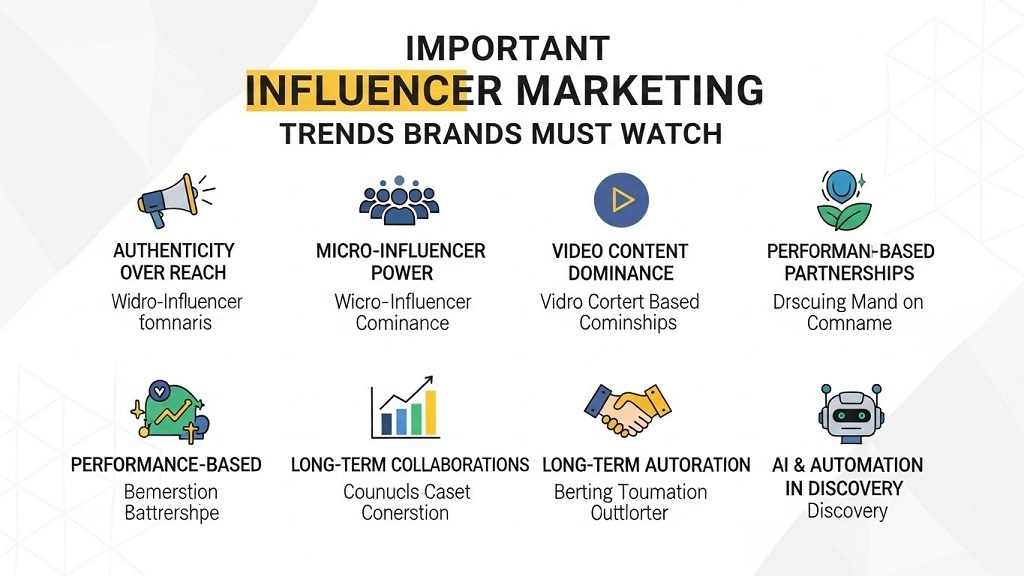
Influencer marketing trends this year show a clear shift from follower count to measurable impact. Brands are focusing more on trust, long-term brand collaborations, data-backed decisions, and niche social media influencers who deliver real business outcomes.
Influencer marketing is no longer an experiment. It is now a core part of digital growth strategies for startups, D2C brands, and enterprise companies. According to industry benchmarks, global influencer marketing spend crossed $21 billion recently, and brands that use structured creator partnerships report higher engagement and better conversion rates compared to paid ads alone.
The problem? Many brands are still using outdated approaches. One-off posts. Vanity metrics. Poor creator alignment. These gaps lead to wasted budgets and low ROI.
The solution is understanding how influencer marketing is evolving. This article breaks down the most relevant influencer marketing trends brands must watch this year. Each section answers a real search-style question, starts with a clear snippet-ready response, and then expands with practical insights, data points, and real-world examples.
If you work with social media influencers or plan brand collaborations this year, this guide will help you make smarter, more profitable decisions.
Why Are Brands Shifting From Mega Influencers to Niche Creators?
Brands are shifting to niche influencers because they deliver higher engagement and stronger audience trust.
Mega influencers still offer reach, but reach alone no longer guarantees results. Many brands now report better performance from micro and nano influencers with smaller but highly focused audiences.
Here’s why this shift is happening:
- Micro influencers often have engagement rates 2–3x higher than large accounts
- Niche audiences trust recommendations more
- Content feels less like advertising
- Costs are lower and more scalable
Case insight: A D2C skincare brand tested two campaigns. One used a single creator with over 1M followers. The other used 25 niche creators in skincare and wellness. The niche creator campaign generated 38% more conversions with 42% lower cost per acquisition.
This trend is pushing brands to prioritize relevance over reach. Social media influencers with clear audience alignment now outperform generic celebrity partnerships.
How Are Long-Term Brand Collaborations Replacing One-Off Campaigns?
Long-term brand collaborations create consistency, trust, and better ROI than one-time influencer posts.
One-off influencer campaigns often fail because audiences do not build familiarity with the brand. Long-term partnerships solve this problem.
Brands are now signing creators for 3, 6, or 12-month collaborations. This allows creators to:
- Integrate the brand naturally into content
- Educate audiences over time
- Show real product usage
- Build repeated brand recall
Data point: Brands using ongoing influencer partnerships report up to 60% higher brand recall compared to short-term campaigns.
For brands, long-term collaborations also reduce onboarding time, improve content quality, and create predictable performance metrics.
Why Is Authentic Content Now More Important Than High Production Quality?
Authenticity now outperforms polished content because audiences want real experiences, not ads.
Highly edited, studio-style influencer content is losing effectiveness. Audiences on platforms like Instagram, TikTok, and YouTube Shorts respond better to raw, experience-driven content.
This trend is driven by:
- Ad fatigue across social platforms
- Growth of short-form video
- Demand for transparency
Brands that allow influencers creative freedom see better outcomes. Over-scripted content often underperforms because it breaks audience trust.
Real example: A fitness brand allowed creators to share honest pros and cons of their product. Despite mentioning limitations, the campaign achieved a higher conversion rate than scripted endorsements.
Trust is now the strongest currency in influencer marketing.
How Is Performance-Based Influencer Marketing Changing Brand Strategies?
Performance-based influencer marketing ties creator compensation to results, not just content delivery.
Brands are moving away from flat fees and experimenting with hybrid payment models. These include:
- Affiliate commissions
- Revenue sharing
- Cost-per-lead agreements
- Bonus-based performance tiers
This approach benefits both sides. Brands reduce risk. Influencers earn more when content performs well.
Case insight: An ecommerce brand shifted 40% of its influencer budget to commission-based deals. Influencer-driven revenue increased by 27% in one quarter.
This trend is pushing influencer marketing closer to measurable growth channels rather than brand-only awareness tools.
Why Are Brands Using Influencers Across the Entire Funnel?
Influencers now impact awareness, consideration, and conversion stages of the buyer journey.
Earlier, influencer marketing focused mainly on awareness. That has changed.
Modern brand collaborations use influencers to:
- Introduce products (top of funnel)
- Share reviews and tutorials (mid funnel)
- Drive conversions with offers and links (bottom funnel)
Brands are also repurposing influencer content into ads, landing pages, and email campaigns.
Data insight: User-generated influencer content used in paid ads often outperforms brand-created ads in click-through rate.
This integrated approach increases ROI and content lifespan.
How Is AI Influencing Influencer Marketing Trends This Year?
AI is helping brands identify the right influencers, predict performance, and measure ROI more accurately.
AI-powered tools now assist with:
- Audience authenticity checks
- Engagement quality analysis
- Campaign forecasting
- Fraud detection
Brands are also using AI to match creators with campaigns based on audience behavior rather than surface metrics.
This reduces fake engagement risks and improves creator-brand fit.
Why Is Transparency Becoming a Non-Negotiable Trend?
Transparency builds trust and protects brands from compliance and reputation risks.
Audiences are more aware of sponsored content. Regulatory bodies are also stricter about disclosure.
Brands now require:
- Clear ad disclosures
- Honest reviews
- Transparent partnerships
Influencers who maintain transparency see higher long-term audience loyalty.
What Should Brands Do Next to Stay Ahead of Influencer Marketing Trends?
Brands that adapt to current influencer marketing trends gain trust, consistency, and measurable growth.
The era of chasing follower counts is over. Today’s successful brands focus on relevance, long-term brand collaborations, authentic storytelling, and performance-driven partnerships with social media influencers.
The biggest opportunity this year is alignment. Aligning with creators who understand your audience. content with real user needs. Aligning influencer marketing with overall business goals.
If your brand treats influencer marketing as a long-term growth channel rather than a short-term promotion, the results will follow.
Call to Action: Review your current influencer strategy today. Audit your partnerships. Shift toward data-backed, trust-driven collaborations. The brands that act now will lead the next phase of influencer marketing.
Frequently Asked Questions About Influencer Marketing Trends
What are the biggest influencer marketing trends right now?
The biggest trends include niche influencer growth, long-term brand collaborations, performance-based payments, authentic content, and AI-driven influencer selection.
Are micro influencers better than big influencers?
Micro influencers often deliver higher engagement and trust. They work best for targeted campaigns, while big influencers are useful for mass awareness.
How do brands measure influencer marketing success?
Brands track engagement quality, conversions, revenue, cost per acquisition, and brand lift instead of just likes or follower counts.
Is influencer marketing still effective?
Yes. Influencer marketing remains effective when executed with the right creators, clear goals, and performance tracking.
What platforms are best for influencer marketing?
Instagram, TikTok, YouTube, and emerging short-form platforms remain the most effective, depending on audience and content format.
How much should brands budget for influencer marketing?
Budgets vary, but many brands allocate 10–20% of their digital marketing spend to influencer campaigns.
Related Topics: What Is the Future of Software Development and Why Should You Care?
Related Topics: Future Trends in High Tech Assistive Technology Research