
Great photos often depend more on camera angles than expensive equipment. Research shows that smartphone cameras capture billions of photos every day, while over 90% of images shared online come from mobile devices. Learning remote camera selfie methods can also improve framing for solo shots. This guide explains how to improve phone camera angles in New York, NY with practical techniques that create professional looking images using only your smartphone.
Understand Your Surroundings Before Taking Photos
Every great image begins with careful observation of the environment. New York offers endless architectural lines, colorful neighborhoods, parks, and waterfronts that naturally improve composition.
Lighting changes throughout the day, so plan your shooting time carefully. Additionally, understanding common bone conduction headset problems reminds creators to stay aware of surroundings while recording outdoor content.
Look behind your subject before tapping the shutter button. Clean backgrounds reduce distractions and help viewers focus on the main subject.
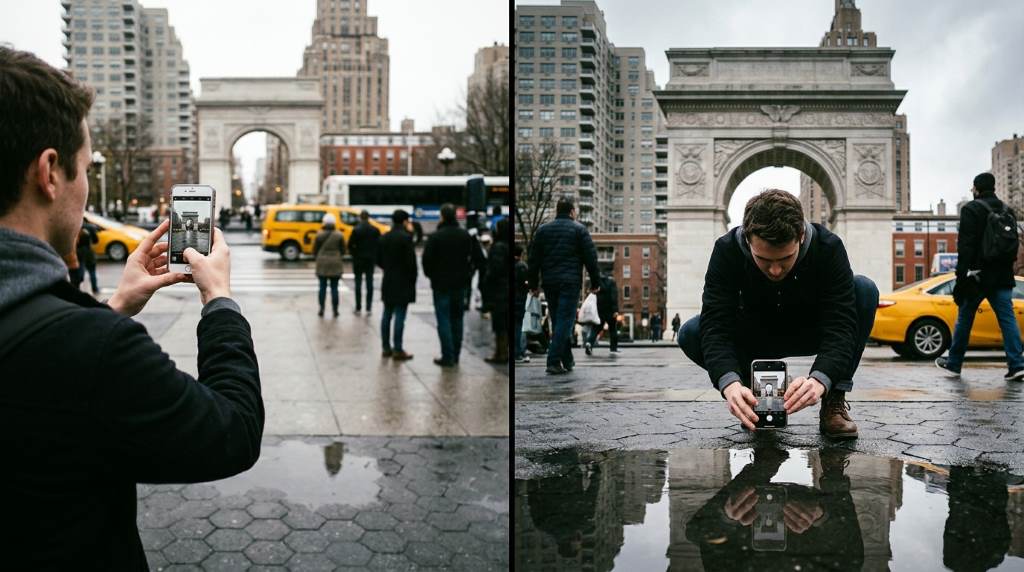
Use Camera Height to Create Better Perspectives
Changing camera height instantly transforms ordinary photos into interesting images. Even moving your phone several inches creates noticeable visual improvements.
Lower angles make buildings appear taller and more dramatic. Meanwhile, higher angles often produce cleaner travel, food, and street photography.
Experiment before choosing your favorite composition. Likewise, learning how to fix call display problems keeps your smartphone working reliably during photography sessions.
Low Angle Benefits
- Adds depth to city streets.
- Creates stronger leading lines.
- Makes landmarks appear larger.
- Improves dramatic portraits.
High Angle Benefits
- Removes distracting backgrounds.
- Highlights patterns and symmetry.
- Improves food photography.
- Creates balanced travel photos.
Frame Subjects with Natural City Elements
Natural framing helps viewers focus immediately on the subject. Doorways, bridges, windows, trees, and public art all create attractive visual borders.
Instead of placing every subject in the center, position important elements using the rule of thirds. Furthermore, planning locations carefully resembles deciding when a CCTV drain survey becomes worthwhile because preparation improves results.
Repeat this approach across different neighborhoods for consistent quality. Your gallery will quickly develop a more professional appearance.
Master Natural Light Throughout the Day
Natural light shapes every photo regardless of camera quality. Morning and late afternoon usually provide softer light with balanced colors.
Avoid placing bright sunlight directly behind your subject unless you intentionally want silhouettes. Instead, move slightly until faces receive even lighting.
Cloudy weather often creates excellent portrait conditions because clouds naturally soften harsh shadows. As a result, skin tones appear smoother without additional editing.
Improve Composition Using Simple Techniques
Composition guides viewers toward the subject without confusion. Fortunately, several easy methods work well in almost every location.
- Use leading lines from sidewalks or bridges.
- Leave space in front of moving subjects.
- Keep horizons perfectly straight.
- Avoid clutter near the frame edges.
- Balance bright and dark areas naturally.
Small adjustments before pressing the shutter often create bigger improvements than heavy editing later. Consistent practice develops stronger visual instincts over time.
Capture Better Portrait Angles
Portrait photography benefits from careful positioning instead of complicated camera settings. Encourage subjects to relax naturally before taking multiple photos.
Hold the phone slightly above eye level for flattering facial proportions. Then ask the subject to turn gently toward available light.
Avoid standing too close because wide smartphone lenses may distort facial features. Step backward and zoom slightly when possible.
Create Strong Travel Photos Around the City
Travel photography tells stories through thoughtful composition rather than random snapshots. Include nearby details that represent the location without overwhelming the subject.
Photograph famous landmarks from uncommon viewpoints whenever practical. Consequently, your images become more memorable than standard tourist photos.
Wait patiently for fewer people to enter the frame before capturing important scenes. Patience often produces cleaner and more engaging photographs.
Use Grid Lines for Better Alignment
Most smartphones include built in camera grids that simplify composition. Enable this feature before your next photography session.
Align buildings with vertical grid lines to reduce crooked perspectives. Likewise, place horizons along horizontal guides for balanced landscape images.
Grid lines also help maintain symmetry inside modern architecture. Therefore, interior photography becomes noticeably cleaner.
Avoid Common Camera Angle Mistakes
Many people unknowingly repeat mistakes that reduce photo quality. Fortunately, simple corrections create immediate improvements.
- Do not block the lens with your fingers.
- Avoid tilting the phone unnecessarily.
- Clean the camera lens before shooting.
- Skip excessive digital zoom.
- Check backgrounds carefully before capturing images.
Review every image before leaving the location. Taking another photo immediately often saves valuable memories.
Edit Carefully Without Overprocessing
Editing should improve photos instead of hiding mistakes. Small adjustments usually create the most natural appearance.
Increase brightness only when necessary while preserving realistic colors. Next, crop distracting edges without removing important details.
Avoid extreme filters because timeless images depend on authentic colors. Consistent editing also creates a recognizable personal photography style.
Practice Regularly for Lasting Improvement
Photography skills improve through repeated practice instead of expensive equipment. Visit different neighborhoods and challenge yourself with fresh compositions.
Compare older photos with recent work to identify progress. Eventually, better camera angles become natural habits instead of conscious decisions.
Conclusion
Learning how to improve phone camera angles in New York, NY requires observation, practice, and thoughtful composition rather than costly gear. Apply these techniques consistently, experiment with different perspectives, and review your results after every session. Small improvements quickly build stronger photography skills that produce impressive images for personal memories, social media, or professional projects. Start practicing today and transform every smartphone photo into a more engaging visual story.
Frequently Asked Questions
What is the best camera angle for phone portraits?
Holding the phone slightly above eye level usually creates the most flattering portrait.
Should I use digital zoom on my phone?
No, moving closer normally produces sharper images than digital zoom.
When is the best time to shoot outdoor photos?
Morning and late afternoon generally provide softer and more attractive natural lighting.
Do grid lines improve smartphone photography?
Yes, grid lines help create balanced compositions and straighter horizons.
How often should I clean my phone camera lens?
Clean the lens before every photography session for consistently sharp photos.