
Assistive technology is transforming lives around the world. These innovations help people with disabilities live more independently and participate fully in society. Researchers are developing exciting new solutions that seemed impossible just a few years ago. This article explores the most promising trends shaping the future of assistive technology.
The Current State of Assistive Technology
Today’s assistive devices have come far from simple wheelchairs and hearing aids. Modern technology includes smartphone apps for communication, robotic limbs, and smart home systems. These tools empower millions of people daily.
However, significant gaps still exist. Many devices remain expensive and inaccessible to those who need them most. Additionally, current solutions often lack personalization for individual needs. Therefore, researchers focus on creating more affordable, adaptable, and effective options.
According to The New York Times, artificial intelligence is opening new possibilities for assistive technology. These advances promise to make assistance more intuitive and responsive than ever before.
Artificial Intelligence and Machine Learning
Artificial intelligence stands at the forefront of assistive technology research. AI systems learn from user behavior and adapt to individual needs over time. This personalization creates tools that feel natural and intuitive to use.
Machine learning algorithms can predict what users need before they ask. For example, a smart wheelchair might learn common routes and automatically adjust speed for different terrain. Similarly, communication apps can predict words and phrases based on context and personal vocabulary.
Computer vision powered by AI helps blind and visually impaired individuals navigate their environment. These systems identify objects, read text aloud, and describe scenes in real time. Meanwhile, improvements in processing speed make these features work instantly on smartphones.
Natural language processing enables more sophisticated voice control systems. Users can speak naturally rather than memorizing specific commands. Consequently, technology becomes accessible to people with cognitive disabilities who struggle with complex interfaces.
Brain-Computer Interfaces
Brain-computer interfaces represent one of the most revolutionary developments in assistive technology. These systems read brain signals and translate them into actions. Users can control devices using only their thoughts.
Current research focuses on making these interfaces less invasive and more reliable. Early systems required surgical implants, but newer versions use external sensors. These wearable devices detect brain activity through the skull.
People with severe mobility limitations benefit enormously from this technology. Individuals with conditions like ALS can communicate and control their environment despite complete paralysis. The technology interprets intended movements from brain signals.
Scientists are improving the accuracy and speed of brain-computer interfaces. Earlier versions required intense concentration and practice. However, modern systems respond more quickly and require less mental effort. This makes the technology practical for daily use.
Research teams are expanding the range of commands these systems can understand. Users will soon control multiple devices simultaneously using different thought patterns. Additionally, haptic feedback will provide sensory information back to users.
Robotic Assistance and Exoskeletons
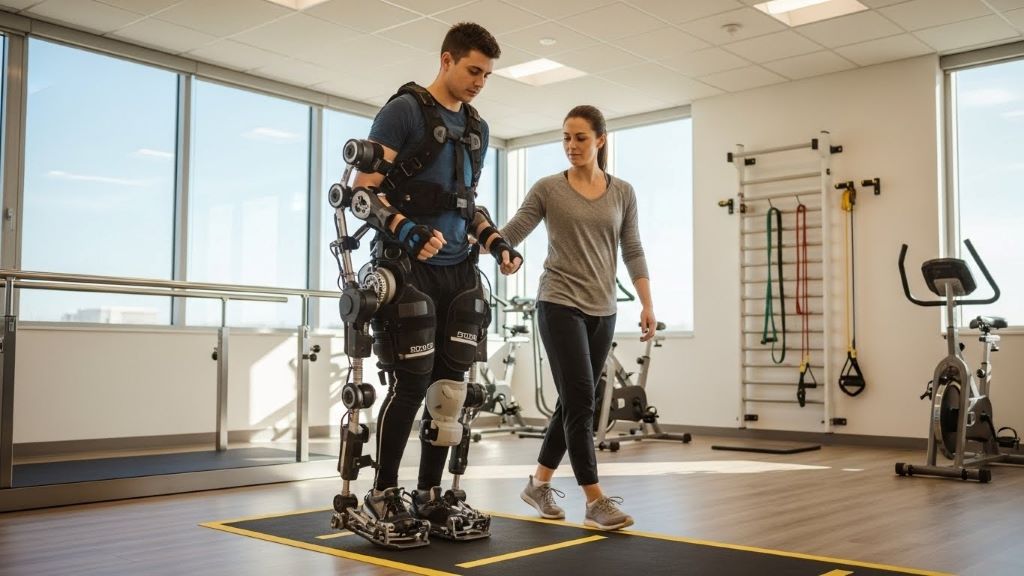
Robotic technology continues advancing rapidly in the assistive field. Powered exoskeletons help people with spinal cord injuries walk again. These wearable robots support body weight and move legs through natural walking motions.
Newer exoskeletons are becoming lighter, more affordable, and easier to use. Earlier models weighed over fifty pounds and cost hundreds of thousands of dollars. Current research aims to create versions under twenty pounds that cost less than a car.
Robotic arms and hands provide unprecedented dexterity for people with upper limb differences. These prosthetics respond to muscle signals and provide sensory feedback. Users can feel texture, temperature, and pressure through their artificial limbs.
Soft robotics represents an emerging area within this field. Unlike rigid mechanical systems, soft robots use flexible materials that move more naturally. These devices conform to the body and feel more comfortable during extended wear.
Home care robots assist people with daily living activities. These machines can prepare meals, fetch items, and help with personal care tasks. Furthermore, they provide companionship and emergency response capabilities for people living independently.
Augmented and Virtual Reality Applications
Augmented reality overlays digital information onto the real world. This technology assists people with various disabilities in powerful ways. For instance, AR glasses can enhance remaining vision for people with visual impairments.
These devices amplify contrast, magnify objects, and highlight important features in the environment. Navigation becomes easier with AR arrows showing the way. Additionally, facial recognition helps people with prosopagnosia identify friends and family members.
Virtual reality offers therapeutic applications for people with disabilities. VR environments provide safe spaces to practice mobility skills and social interactions. Physical therapists use VR to make rehabilitation exercises more engaging and effective.
Researchers are developing VR systems specifically for cognitive training. These programs help people with brain injuries or developmental disabilities improve memory, attention, and problem-solving skills. The immersive nature of VR makes therapy feel less like work.
Mixed reality combines elements of both AR and VR. These systems allow people with disabilities to interact with virtual objects in real spaces. This technology shows promise for job training and educational applications.
Personalized 3D Printing Solutions
Three-dimensional printing is democratizing assistive technology creation. Custom devices can now be designed and manufactured quickly and affordably. This addresses a major problem with traditional assistive devices that come in limited sizes and configurations.
Prosthetic limbs represent the most visible application of 3D printing. Children can receive colorful, personalized prosthetics at a fraction of traditional costs. As they grow, new devices can be printed quickly without financial burden.
Researchers are developing printable materials with specialized properties. Some materials mimic the flexibility of human tissue. Others conduct electricity for embedding sensors and circuits directly into devices.
Custom orthotics and braces become accessible through 3D scanning and printing. Healthcare providers scan a patient’s body and design perfectly fitted devices. The printing process takes hours instead of the weeks required for traditional fabrication.
Open-source design communities share 3D printing files freely online. This allows people worldwide to access assistive technology designs. Local makers can then print devices for their communities at minimal cost.
Wearable Health Monitoring Systems
Wearable sensors continuously track health metrics for people with chronic conditions. These devices monitor heart rate, blood sugar, oxygen levels, and more. Real-time data helps users and healthcare providers make informed decisions.
Smart clothing with embedded sensors represents the next generation of wearables. These garments monitor posture, detect falls, and track movement patterns. Unlike external devices, smart textiles feel natural and unobtrusive to wear.
Predictive analytics use data from wearables to anticipate health crises. For example, seizure detection systems alert users before episodes occur. This advance warning provides time to reach safety and notify caregivers.
Researchers are miniaturizing sensors to create nearly invisible monitoring systems. Some experimental devices are small enough to be placed under the skin. Others dissolve naturally in the body after serving their purpose.
Integration with smart home systems creates comprehensive care environments. Wearables communicate with home devices to adjust lighting, temperature, and alert emergency services automatically. Consequently, people with disabilities can live more safely and independently.
Improved Communication Technologies
Communication assistance continues evolving with new technology. Eye-tracking systems allow people with limited mobility to type using only eye movements. These systems have become faster and more accurate through machine learning.
Text-to-speech technology now sounds remarkably natural. Modern systems capture emotional nuance and personal speaking styles. Users can create custom voices that reflect their personality and identity.
Real-time translation breaks down language barriers for deaf and hard-of-hearing individuals. Apps instantly convert speech to text and sign language. Similarly, text and signs translate back to spoken language for hearing people.
Researchers are developing systems that predict entire sentences from minimal input. Users might type a few letters or select symbols, and AI suggests complete thoughts. This dramatically increases communication speed for people with motor impairments.
Multimodal communication platforms combine various input and output methods. Users might switch between speech, text, symbols, and gestures based on context and preference. This flexibility makes communication accessible in different situations.
Accessible Smart Home Integration
Smart home technology increasingly considers accessibility from the start. Voice assistants control lights, locks, thermostats, and appliances through simple commands. This independence transforms daily life for people with mobility limitations.
However, current voice systems struggle with speech differences caused by some disabilities. Therefore, researchers are training AI to understand diverse speech patterns. These inclusive systems recognize commands from users with dysarthria, stuttering, and other speech characteristics.
Visual alert systems convert sounds into light signals for deaf individuals. Doorbells, fire alarms, and phone rings trigger lights throughout the home. Additionally, vibration alerts worn on the body provide notification in any room.
Automated systems learn user routines and anticipate needs. Lights brighten automatically when someone wakes up. Doors unlock as residents approach. These conveniences particularly benefit people with cognitive disabilities who struggle with complex sequences.
Environmental control systems allow comprehensive home management from a single interface. Users control every aspect of their environment through their preferred input method. Whether using voice, switches, or eye tracking, the same powerful control remains available.
Challenges and Ethical Considerations
Despite exciting advances, significant challenges remain. Cost continues to be a major barrier to accessing high-tech assistive devices. Many innovations exist only in research labs or cost tens of thousands of dollars.
Insurance coverage for assistive technology varies widely and often excludes cutting-edge devices. Consequently, only wealthy individuals can access the best solutions. Researchers and advocates push for policy changes to improve accessibility.
Privacy concerns arise with devices that collect extensive personal data. Wearable sensors and smart home systems track intimate details about users’ lives. Strong data protection measures must accompany these technologies.
The digital divide affects people with disabilities disproportionately. Many assistive technologies require high-speed internet and modern smartphones. Rural areas and developing countries often lack this infrastructure.
User involvement in design remains insufficient. Too often, engineers create solutions without consulting the people who will use them. Therefore, more research emphasizes co-design approaches where users actively participate in development.
The Role of Global Collaboration
International research partnerships accelerate assistive technology development. Scientists share findings across borders and build on each other’s work. This collaboration prevents duplication and speeds progress.
According to BBC News, global initiatives are working to make assistive technology available in developing nations. These programs adapt high-tech solutions for local contexts and resource constraints.
Open-source movements promote accessibility of assistive technology designs. Researchers publish their work freely so others can improve upon it. This approach contrasts with proprietary systems that limit innovation.
Cross-disciplinary teams bring diverse expertise to assistive technology challenges. Engineers work alongside clinicians, designers, and people with disabilities. These varied perspectives create more effective and user-friendly solutions.
International standards help ensure compatibility between devices. Users can mix and match components from different manufacturers. Additionally, training and support become more consistent worldwide.
Conclusion
The future of high-tech assistive technology holds tremendous promise. Artificial intelligence, brain-computer interfaces, robotics, and other innovations are making previously impossible things reality. These technologies enable greater independence, participation, and quality of life for people with disabilities. However, challenges around cost, accessibility, and ethical implementation remain. Success requires continued research investment, policy reform, global collaboration, and most importantly, involvement of people with disabilities in the design process. As these trends mature and converge, assistive technology will become more powerful, affordable, and seamlessly integrated into daily life for millions of people worldwide.
Frequently Asked Questions
What is the most promising emerging assistive technology?
Brain-computer interfaces show exceptional promise for people with severe disabilities. These systems allow control of devices through thought alone. However, AI-powered systems that learn and adapt to individual needs may have the broadest impact across different disability types.
How much will future assistive technologies cost?
Costs vary widely depending on the technology. Three-dimensional printing and smartphone apps are making some solutions very affordable. However, advanced robotics and brain-computer interfaces currently remain expensive. Researchers aim to reduce costs through mass production and simpler designs.
When will these technologies become widely available?
Some technologies like AI-powered apps are available now. Others like advanced exoskeletons are in clinical trials and may reach consumers within five years. The most experimental technologies like dissolving sensors might take a decade or more. Regulatory approval and insurance coverage affect availability timelines.
How can I participate in assistive technology research?
Many universities and companies seek participants for assistive technology studies. Contact disability organizations to learn about opportunities. Additionally, some programs pay participants for their time and feedback. User involvement improves research outcomes significantly.
Will assistive technology work for my specific disability?
Assistive technology solutions exist for nearly every type of disability. However, individual needs vary greatly. Consult with rehabilitation specialists and assistive technology professionals to identify appropriate options. Many research programs also seek participants with specific conditions to test new solutions.
Related Topics: