
Building a web application from scratch is like constructing a house without blueprints or tools. Python frameworks provide the essential structure and components that make web development faster, more secure, and significantly more efficient. According to the Stack Overflow Developer Survey 2023, Python remains one of the most popular programming languages, with Django and Flask ranking among the top web frameworks used by developers worldwide. Understanding why frameworks matter can transform how you approach web development projects. In this guide, you’ll learn the core reasons Python frameworks are indispensable, how they streamline development, and practical ways to leverage them for your next application.
Understanding the Basics
Python frameworks are pre-built collections of modules, libraries, and tools that provide a foundation for developing web applications. Instead of writing every line of code from scratch, frameworks handle common tasks like routing, database management, and user authentication. Think of a framework as a professional kitchen with all the equipment ready—you focus on creating the meal, not building the stove. This structured approach follows established patterns and best practices, allowing developers to build robust applications efficiently while maintaining code quality and consistency.
Why This Topic Matters
Python frameworks have become crucial in modern web development because they directly impact project success, timeline, and maintainability. The importance extends beyond simple convenience:
- Accelerated Development Speed – Frameworks reduce development time by 40-60% through reusable components and built-in functionality
- Enhanced Security – Built-in protection against common vulnerabilities like SQL injection, cross-site scripting, and CSRF attacks
- Scalability Support – Architecture designed to handle growth from hundreds to millions of users
- Cost Efficiency – Faster development means lower costs and quicker time-to-market
- Community Support – Access to extensive documentation, plugins, and developer communities for troubleshooting
Consider a startup building a social media platform. Without a framework, they’d spend months building user authentication, database connections, and security features. With Django, these components are ready out of the box, allowing the team to focus on unique features that differentiate their product. This advantage can mean the difference between launching in three months versus nine months.
Key Components That Make Python Frameworks Essential
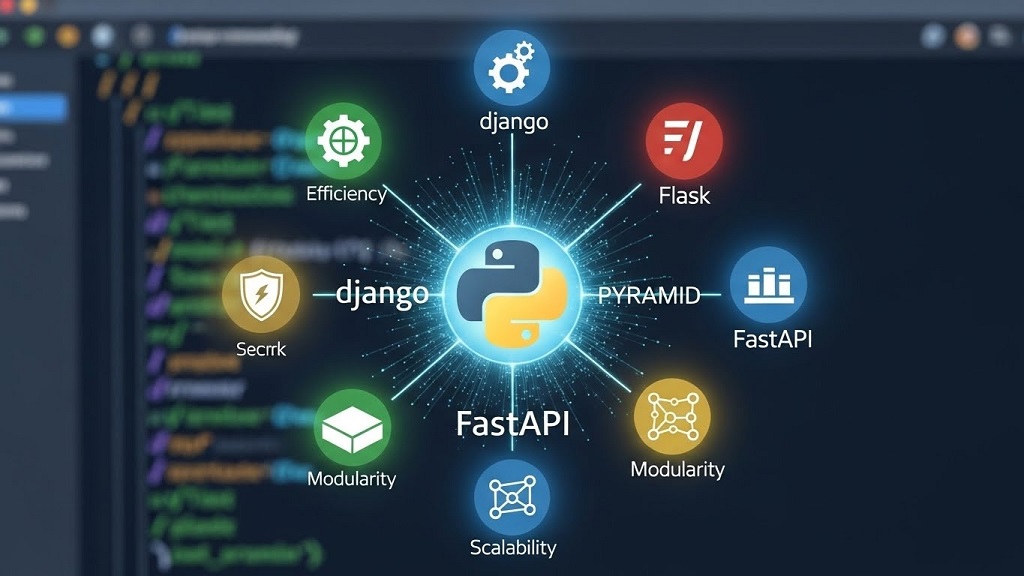
Pre-Built Authentication and Security Systems
Python frameworks come equipped with robust authentication systems that handle user registration, login, password encryption, and session management automatically. Django’s authentication system, for example, includes password hashing using PBKDF2 algorithm with SHA256 hash, protection against brute-force attacks, and built-in middleware for security headers. This saves weeks of development time and ensures your application follows security best practices without requiring deep security expertise. The framework also provides protection against common web vulnerabilities through automatic escaping of user input and CSRF token validation.
Database Abstraction and ORM (Object-Relational Mapping)
Rather than writing raw SQL queries, frameworks provide ORM systems that let you interact with databases using Python code. This abstraction means you can switch between PostgreSQL, MySQL, or SQLite without rewriting your database logic. For instance, creating a user record becomes as simple as user = User.objects.create(username=’john’, email=’[email protected]’) instead of complex SQL statements. ORMs also handle database migrations automatically, preventing data loss and inconsistencies as your application evolves. This feature alone eliminates countless hours debugging database connection issues.
URL Routing and Request Handling
Frameworks provide elegant systems for mapping URLs to specific functions or views in your code. Instead of manually parsing URLs and handling different HTTP methods, you define clean routing patterns. Flask allows you to create routes with simple decorators like @app.route(‘/profile/<username>’), making your code readable and maintainable. This structured approach prevents common routing mistakes like duplicate URLs, improper HTTP method handling, or forgotten edge cases. The framework also handles request parsing, form data validation, and response formatting automatically.
Practical Tips You Can Apply Today
- Start with a microframework for small projects – Use Flask or FastAPI for APIs and simple applications where you need flexibility. This prevents over-engineering and keeps your codebase lean.
- Choose Django for full-featured applications – If you’re building a content management system, e-commerce platform, or any application requiring an admin panel, user management, and extensive database operations, Django provides everything out of the box.
- Leverage middleware for cross-cutting concerns – Use framework middleware to handle logging, authentication checks, and request modification globally instead of repeating code in every view function.
- Use virtual environments and requirements.txt – Always isolate your framework and dependencies using virtual environments to avoid version conflicts and ensure reproducibility across development, staging, and production.
- Follow the framework’s project structure conventions – Don’t fight the framework’s recommended file organization. This makes your code understandable to other developers and easier to maintain long-term.
Common Mistakes and How to Avoid Them
Choosing the wrong framework for your project scope – New developers often pick heavyweight frameworks like Django for simple APIs or lightweight frameworks for complex enterprise applications. Evaluate your project requirements first: data complexity, expected traffic, team size, and timeline. Match the framework’s strengths to your actual needs rather than popularity or personal preference.
Ignoring framework security best practices – Using frameworks doesn’t automatically make your application secure. Developers sometimes disable security features for convenience during development and forget to re-enable them. Always keep DEBUG mode off in production, use environment variables for sensitive data, and follow the framework’s security checklist before deployment.
Over-customizing or fighting framework conventions – Some developers try to rewrite core framework functionality or completely ignore established patterns. This creates maintenance nightmares and loses the framework’s benefits. If you find yourself constantly working against the framework, you might have chosen the wrong tool for your specific use case.
Neglecting to update framework versions – Running outdated framework versions exposes applications to known security vulnerabilities. Create a regular schedule for reviewing and applying framework updates, testing in a staging environment first. Most frameworks provide clear migration guides for version upgrades.
Real Example from an E-Commerce Development Project
Last year, a mid-sized retail company needed to build a custom e-commerce platform to replace their expensive third-party solution. Initially, they considered building everything from scratch to have complete control. However, after consulting with their development team, they chose Django for the project.
The decision proved transformative. Django’s admin panel allowed the marketing team to manage products, categories, and promotions without developer intervention. The built-in authentication system handled customer accounts and password resets securely. Using Django REST Framework, they built a mobile API in parallel with the web application, reusing business logic seamlessly.
What would have taken 18 months to build from scratch was completed in 7 months. The company saved approximately $200,000 in development costs and launched before their peak holiday season. The framework’s scalability allowed them to handle Black Friday traffic spikes without performance issues. This real-world outcome demonstrates how choosing the right Python framework directly impacts business success, not just technical efficiency.
Final Thoughts
Python frameworks have fundamentally changed web development by providing robust, secure, and efficient foundations for building applications. They eliminate repetitive tasks, enforce best practices, and allow developers to focus on creating unique value rather than reinventing common functionality. Whether you’re building a simple API with Flask, a full-featured web application with Django, or a high-performance async application with FastAPI, frameworks accelerate your development timeline while improving code quality.
The key is understanding your project requirements and choosing the framework that aligns with your goals. Start small, follow framework conventions, and leverage the extensive communities around these tools. Your next web application will be more secure, maintainable, and successful as a result.
Ready to start your next project? Choose a Python framework that matches your needs and begin building today. The tools are ready—your success depends on taking that first step.
FAQs
What is the best Python framework for beginners?
Flask is ideal for beginners because of its simplicity and minimal boilerplate code. You can build a working web application in just a few lines, making it easier to understand core concepts without overwhelming complexity. Once comfortable, you can explore Django for more comprehensive projects.
Are Python frameworks suitable for large-scale applications?
Absolutely. Django powers Instagram, Pinterest, and Spotify—platforms serving millions of users daily. The framework’s architecture supports horizontal scaling, caching strategies, and database optimization. Combined with proper infrastructure, Python frameworks handle enterprise-scale applications effectively.
How do Python frameworks compare to JavaScript frameworks like React or Angular?
Python frameworks are backend technologies handling server-side logic, databases, and APIs, while React and Angular are frontend frameworks managing user interfaces. Most modern applications use both: Python frameworks for the backend and JavaScript frameworks for the frontend, communicating through REST APIs or GraphQL.
Do I need to learn Python before using Python frameworks?
Yes, solid Python fundamentals are essential before diving into frameworks. You should understand Python syntax, data structures, object-oriented programming, and basic web concepts like HTTP requests. This foundation typically takes 2-3 months of dedicated learning before frameworks become manageable.
Can Python frameworks be used for mobile app development?
Python frameworks primarily build backend APIs that mobile applications consume. You’d use Django or Flask to create the server-side logic and REST APIs, then connect native iOS/Android apps or cross-platform frameworks like React Native to those APIs for the mobile interface.
References
- Stack Overflow Developer Survey 2023: https://survey.stackoverflow.co/2023/
- Django Project Official Documentation: https://docs.djangoproject.com/
- OWASP Top Ten Web Application Security Risks: https://owasp.org/www-project-top-ten/
- Python Software Foundation: https://www.python.org/psf/
Related Topics: Homepage vs Landing Page, What’s the Difference?
Related Topics: Fixing Engineered Wood Flooring Common Problems